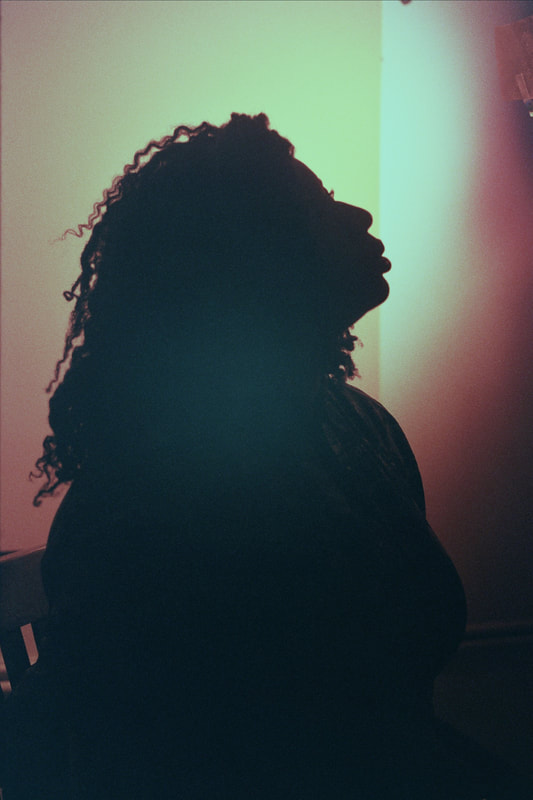
About Ashley Ja'nae Gunter
Multidisciplinary visual artist, research-practitioner, and educator working with Black hair as material and method. My work spans studio practice, critical writing, and participatory research grounded in care, memory, and collective imagination. I treat art-making, writing, and gathering as research methods for studying how Black people practice care and imagine freedom within conditions that deny their being.
How I workAs a multidisciplinary artist and research practitioner, my work is rooted in Black feminist thought and Black studies, generating knowledge through the interplay of making, writing, and facilitation. My research begins with Black hair as material infrastructure shaped by care, regulation, memory, and refusal. Instead of viewing theory as separate from practice, I see knowledge as something created through embodied labor: braiding, marking, gathering, asking, and listening.
My artistic process encompasses various forms, contributing to contemporary art by transforming hair into abstraction, sculpture, and moving images. Studio work allows me to test how hair operates when translated into these forms. Writing places these experiments within the context of Black feminist thought and speculative inquiry, emphasizing their importance in ongoing discussions in Black studies. Workshops and participatory projects function as sites of live research, where questions are posed collectively, and knowledge emerges through conversation, making, and shared reflection. I resist extractive research models that prioritize distance, objectivity, or institutional authority. Instead, I practice inquiry grounded in care, consent, and relational accountability. My work explores how Black communities generate theory and examines how art can help recognize, hold, and extend that knowledge toward creating more livable futures. |
Why this Inquiry
To be Black in this world is to be shaped by systems that define Blackness through subjugation, exclusion, and negotiation. Dominant ideas of safety and belonging are built in opposition to Black life, making freedom appear conditional or unreachable.
I am interested in how Black people create ways of being through care practices, embodied knowledge, and shared memory. Black hair becomes a critical site for this investigation because it intersects with regulation, desire, visibility, intimacy, discipline, and creativity. By studying how we care for, style, share stories about, and imagine hair, I examine both the mechanisms that sustain oppression and the practices that gesture toward liberation.
This work does not assume freedom is already available; it asks what must be built, remembered, and practiced for new worlds to become possible.
I am interested in how Black people create ways of being through care practices, embodied knowledge, and shared memory. Black hair becomes a critical site for this investigation because it intersects with regulation, desire, visibility, intimacy, discipline, and creativity. By studying how we care for, style, share stories about, and imagine hair, I examine both the mechanisms that sustain oppression and the practices that gesture toward liberation.
This work does not assume freedom is already available; it asks what must be built, remembered, and practiced for new worlds to become possible.
Working Principles
Hair as MethodI treat Black hair as an active site of inquiry, shaping how questions are asked, how knowledge is gathered, and how meaning is made.
|
|
For full history, see CV
I am open to collaborations with curators, educators, and community organizations interested in research-driven, care-centered practices.